RECENT POSTS

Top 12 Furniture Buying Mistakes to Avoid 18 Aug, 2026

How to Choose the Right Bed Frame 31 Jul, 2026


Manual vs. Power Reclining Sectionals - Pros, Cons, and Who Each Is For
Lever or button? This honest comparison breaks down how each type works, what they cost, and which one suits your lifestyle — so you choose with confidence.

So you've decided a reclining sectional is the right move. Smart choice. But now you're facing another decision that trips up a lot of buyers: do you go manual or power?
It sounds like a small detail. It's actually one of the most important choices you'll make — because it affects how you use the sofa every single day.
Let's walk through both honestly, so you can make the call that's right for your home.
How Manual Recliners Work
A manual recliner uses a simple lever or push-back mechanism. You either pull a handle on the side of the seat or lean back with your body weight to engage the recline. The footrest pops up automatically as you lean back.
No electricity. No motors. No buttons.
Pros of Manual Recliners:
- More reliable long-term — fewer mechanical parts means fewer things that can break
- Lower cost — no motor or wiring adds to the price
- Works anywhere — no need to position near a power outlet
- Instant response — reclines as fast as you push back
Cons of Manual Recliners:
- Requires physical effort — you need to push back or pull a lever, which can be harder for older users or those with mobility limitations
- Fixed positions — most manual recliners offer only one or two recline positions (usually upright or fully reclined), not infinite adjustment
- Less precise — you can't easily settle at a specific angle between upright and fully flat
How Power Recliners Work
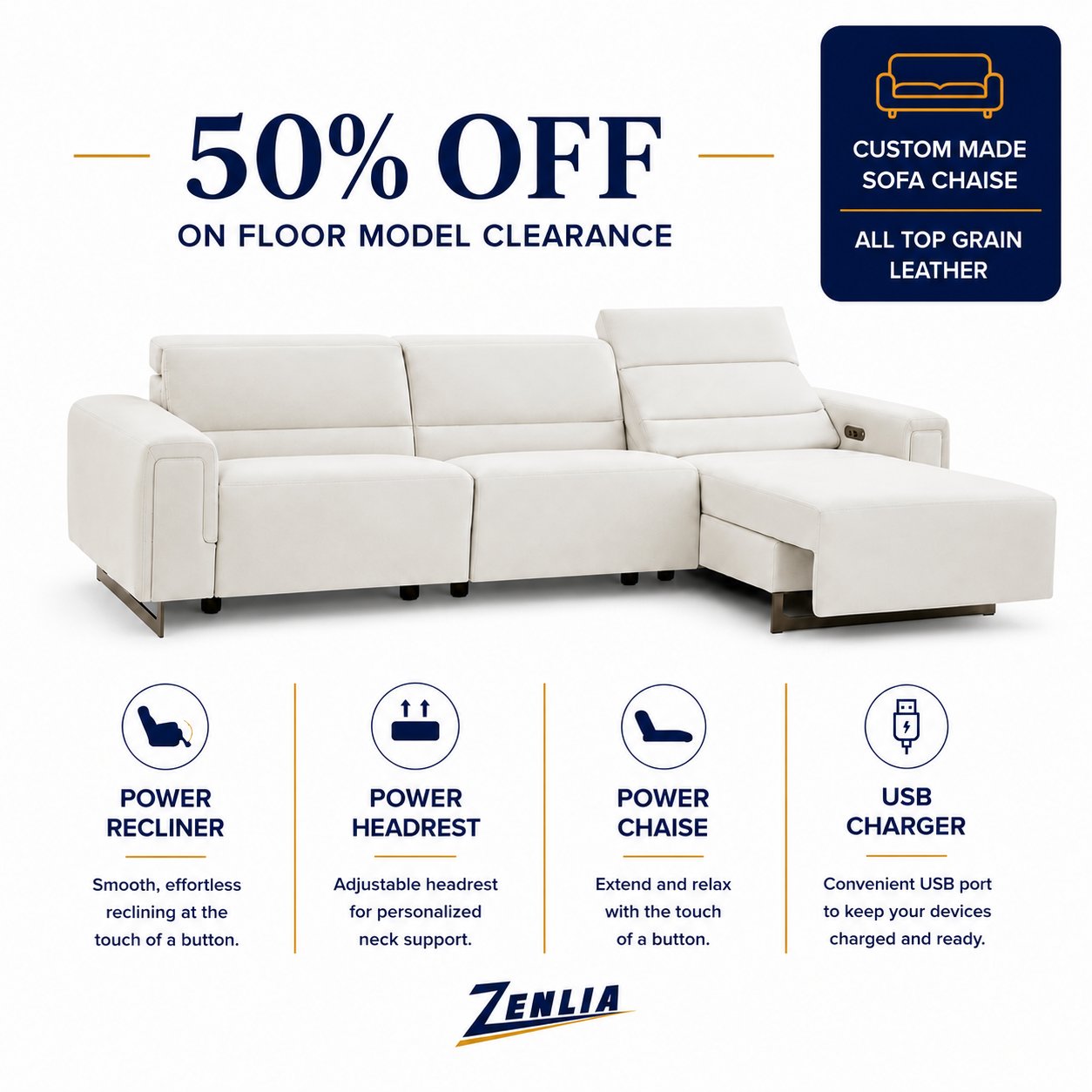
A power recliner uses an electric motor controlled by a button — usually on the armrest, a wired remote, or sometimes even a smartphone app. You press a button and the seat slowly adjusts to your preferred angle.
Pros of Power Recliners:
- Effortless operation — ideal for anyone with back pain, arthritis, or limited mobility
- Infinite positioning — stop at any angle you like, not just preset positions
- Smooth and quiet — modern motors are nearly silent and very smooth
- Extra features — many power sectionals include USB charging ports, adjustable headrests, and lumbar support built in
Cons of Power Recliners:
- Needs a power source — you'll need to plan outlet placement, or use furniture with built-in cord management
- Higher cost — motors and wiring add to the price of the sofa
- More components — more parts means more potential maintenance over many years (though quality motors are very durable)
- Slower response — the motor takes a few seconds to move, unlike instant manual recline
Side-by-Side Comparison
| Feature | Manual | Power |
|---|---|---|
| Operation | Lever or push-back | Button or remote |
| Positions | 1–2 preset | Infinite |
| Power required | No | Yes |
| Best for | Simplicity, durability | Comfort, accessibility |
| Price | Lower | Higher |
| Long-term maintenance | Minimal | Occasional motor check |
So Which One Should You Choose?
Here's a simple way to think about it:
Choose Manual if:
- You want a straightforward, no-fuss sofa that just works
- You're on a tighter budget and want to put more money into frame and fabric quality
- You're placing the sectional away from wall outlets
- You prefer simplicity and fewer components over the long term
Choose Power if:
- Anyone in your household has mobility limitations or back/joint issues
- You want the most comfortable, customizable reclining experience possible
- You're a dedicated home theatre setup person — power recliners pair beautifully with movie nights
- You want the extra features (USB ports, adjustable headrests) that often come with power models
The honest truth? Most people who try a power recliner don't go back. The ability to stop at the exact angle you want — not fully flat, not fully upright, just right — is genuinely hard to give up once you've experienced it.
That said, a well-built manual recliner from a quality manufacturer will outlast a poorly built power recliner any day of the week. The mechanism matters less than the construction behind it.
What About the Frame and Build Quality?
Regardless of which type you choose, the most important thing is what the sofa is built from underneath. A solid hardwood frame makes a reclining sectional feel stable, smooth, and squeak-free for years. Here's why solid wood construction matters more than most people realize →
And once you've settled on manual vs. power, your next decision is usually upholstery. See our full guide on fabric vs. leather for reclining sectionals →
See Both Options at Our Showroom
The best way to feel the difference between manual and power is to try them side by side. At our Woodbridge showroom, we carry both — and our team is happy to walk you through the options without any pressure.